Welcome Sandyford and Goldenhill Residents Association (S.A.G.E.)
Welcome to our website
A residents association uniting the two villages of Sandyford and Goldenhill since 1999
An organisation that aims to improve the environment and lifestyle for all its residents who live in our community
Click here to report any antisocial behaviour
 Crimestoppers |
📹 Dash Cam Footage Appeal – Burglary Investigation
Staffordshire Police are appealing for any dash cam footage relating to a burglary that occurred at Production House, The Boulevard, Tunstall, overnight between 8:00pm on 14 October and 6:00am on 15 October.
The premises are located directly opposite the junction with Stanley Street, Tunstall, on a busy route, and we are keen to hear from anyone who may have captured footage of the area during these times.
If you have dash cam footage showing people or vehicles in the vicinity, or if you recall seeing anyone acting suspiciously around the building, please get in touch.
You can:
Contact Staffordshire Police via 101
Submit information through the online reporting portal
Please quote Incident Reference: 21260171672.
Any information, no matter how small it may seem, could assist our investigation. Thank you for your support.
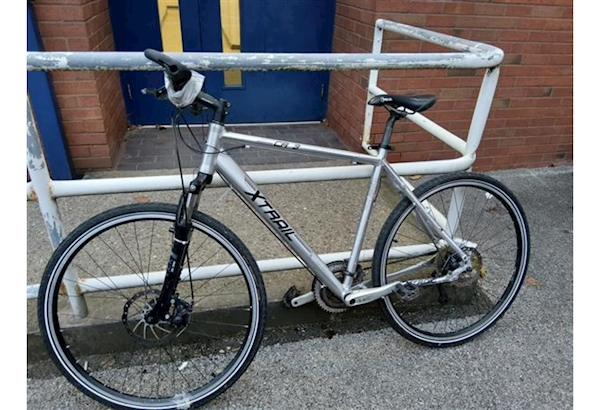
🚲 Can you help us identify the owner of this bike?
A silver XTrail mountain bike has been recovered in the Tunstall area after being abandoned by a suspect who left the scene on foot following an incident.
We believe the bike may have been stolen and are appealing to the public to help us locate its rightful owner. If you recognise this bike, or believe it belongs to you, a family member, or someone you know, please get in touch.
📞 Call 101 quoting incident number 250/12/10, or reply directly to this alert.
Please share this appeal with friends and family to help us reunite the bike with its owner.
Thank you for your assistance. 🚲🔍
Halloween Market Event, Boulevard Tunstall 24/10/26 10 a.m. to 12 noon
Summer Bank Park near play area 28/11/26 14:00 to 14:30
Mobberley Rd 04/11/26 13:30 to 14:00
A place to go, 21 The Boulevard 04/11/26 12:00 to 13:00
A place to go 21 The Boulevard 14/11/26 12:00 to 13:00
Bond St 14/11/26 13:30 to 14:00
Charlotte Street 26/10/26 18:45 to 19:15
All these meetings are subject to being cancelled at sort notice if an incident / scene takes place.
Please Note, Money donations for the Sandyford Fire Fund will close today 16.10.26
Any outstanding money donated, then please contact,
The Dudson Centre, Hope Street, Hanley, Stoke on Trent, ST1 5DD or telephone 01782 683030.
Great news! 🎉 The items stolen from the Chell area last week have been recovered and returned to their owners.
Having just spoken with the father of the young girl whose bike was stolen, he told me she is over the moon to have it back. It’s fantastic to hear such a positive outcome.
While this remains an ongoing investigation, we wanted to share the good news and thank everyone for their support and assistance.
We have had further incidents of vehicle crime reported in the Tunstall area.
please remove any items from your cars and make sure the doors are locked. Myself and Councillor Din will be holding a street meeting on the car park Hawes Street opp the top of Bank Street Monday the 5th October 18:30.
Vehicles Broken Into Overnight
We have received reports of vehicles being broken into overnight within the local area.
Please help protect your vehicle by following these simple crime prevention measures:
✅ Reduce the Risk
Always lock your vehicle and ensure all windows are fully closed.
Remove all valuables, including handbags, wallets, mobile phones, tools, and sat navs.
Do not leave items on display, even loose change or charging cables.
Take keys with you and never leave spare keys in the vehicle.
Park in a well-lit area where possible.
Consider additional security measures such as steering wheel locks, alarms, or CCTV.
👀 Have You Seen Anything Suspicious?
If you witnessed any suspicious activity, or have CCTV, doorbell camera, or dashcam footage that may assist, please report it.
Call 101 or report online via wwwstaffordshire.police.uk
Always call 999 in an emergency or if a crime is in progress.
Working Together to Keep Our Community Safe
Please share this message with family, friends, and neighbours to help prevent further vehicle crime.
Bike Theft Appeal – Chell
During the early hours of yesterday morning, a pink bike was stolen from the Chell area.
This wasn’t just any bike. It was a birthday gift for a young girl who had celebrated her 12th birthday on Monday, making the theft particularly upsetting for both her and her family. They are understandably heartbroken, and we would love to help reunite her with her bike.
Please keep an eye out for this bike and report any sightings. Even the smallest piece of information could make a difference.
If you have seen the bike or know of its whereabouts, please call 101 and quote incident reference 404/06/10.
Thank you for your support
Our crackdown against the illegal and anti-social use of vehicles is continuing, and we are appealing for anyone with information to contact us.
In the last month, eight off-road bikes have been seized in Stoke-on-Trent by the City Intervention Team (CIT), who work proactively to target hotspot areas.
Sergeant Nathan Moghaddam, force lead for Operation Transom, said: “I would like to thank everyone who has come forward with information about where off-road bikes are being used and stored.
“This information is invaluable to us and has led to a number of seizures across the city.
“I would urge people to keep making reports to us and I would also ask anyone who uses drones locally to check their footage for any sightings of off-road bikes.”
Call 101 or use Live Chat on our website, or to make a report to Stoke-on-Trent City Council email operationtransom@stoke.gov.uk.
Staffordshire Police’s Crime Prevention Team will be at the Royal Stoke Hospital Tomorrow, Tuesday 29th September between 10am and 3pm to offer free bike marking and crime prevention advice.
Cycles will be marked with a Bike Register security marking kit and registered on the national police approved database for free. This helps to reduce the risk of theft by warning thieves that you use Bike Register and means you could be reunited with your bike in the event of it being stolen.
A stall will be set up outside the hospital main entrance in the Wellbeing Wagon and you can pop along anytime between 10am and 3pm.
We ask that all cyclist be considerate to all pedestrians and consider pushing their bikes through the hospital grounds where possible
Summer Bank Park near play area 28/11/26 14:00 to 14:30
Mobberley Rd 04/11/26 13:30 to 14:00
BP garage 02/10/26 12:00 to 13:00
A place to go, 21 The Boulevard 04/11/26 12:00 to 13:00
A place to go 21 The Boulevard 14/11/26 12:00 to 13:00
Bond St 14/11/26 13:30 to 14:00
Day of Action Tunstall 02/10/26 9am to 12pm various locations in Tunstall normally have the mobile station in the Sq, if people go to a place to go, they can get hold of me if I’m required elsewhere.
Charlotte Street 26/10/26 18:45 to 19:15
All these meetings are subject to being cancelled at sort notice if an incident / scene takes place.
|
|



Recent Comments